
Neighborhood Guide
Capitol Hill.
Seattle's densest, most walkable quarter — and, three blocks over, some of its calmest streets.
The Portrait
Capitol Hill is really several neighborhoods wearing one name. Pike/Pine hums until late — music rooms, bars, more coffee per block than anywhere else in the city. Broadway carries the daily commerce. And then, north of Aloha, the volume drops: Volunteer Park with its conservatory and water tower, the long shaded blocks of Federal and 14th Avenue East where the mansion builders of the 1900s spent freely, and the Harvard-Belmont landmark district easing down the west slope.
That range is the Hill's real asset. Within a fifteen-minute walk you can pass a 1920s brick apartment house, a turreted Tudor, a four-square with a century of paint on the porch, and a brand-new townhome — with light rail at Broadway and John threading it all to downtown and the university in minutes.
The practical upshot: Capitol Hill rewards specificity. The block matters more here than anywhere in Seattle. East of 15th reads differently than the Pike/Pine core, and the streets around Volunteer Park are a different neighborhood entirely from the ones above the nightlife.
The housing stock
What Capitol Hill is built of.
The widest architectural range in the city — often on a single block.
Tudor & Cottage
1920s – 1940sClinker brick, leaded glass, steep gables — thick on the north-end blocks and around Volunteer Park.
Craftsman
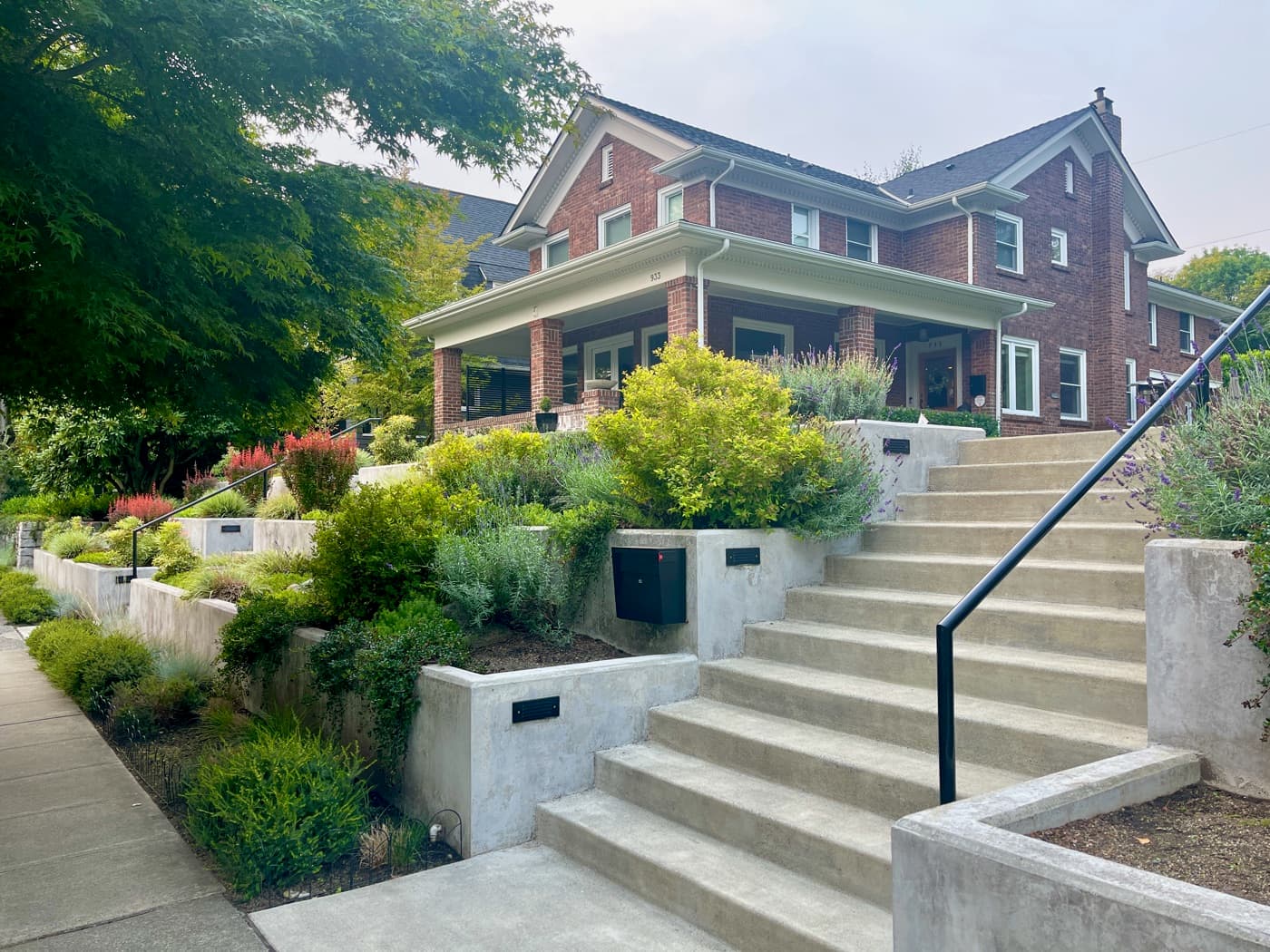
1905 – 1930The Hill's brick and shingle four-squares and porch-fronted boxes line the tree streets east of Broadway.
Contemporary
2000 – todayTownhomes and condo flats fill in around Pike/Pine and Broadway — new construction steps from the light rail.
The Hill changes personality every three blocks. The work isn't finding Capitol Hill — it's finding your three blocks.
More neighborhoods
Begin
Curious about Capitol Hill? Start with a conversation.
Two decades of walking these blocks — Brian can tell you what the listings won't.